Dhaka ·
  Thimphu ·
  Vancouver · Since 2012
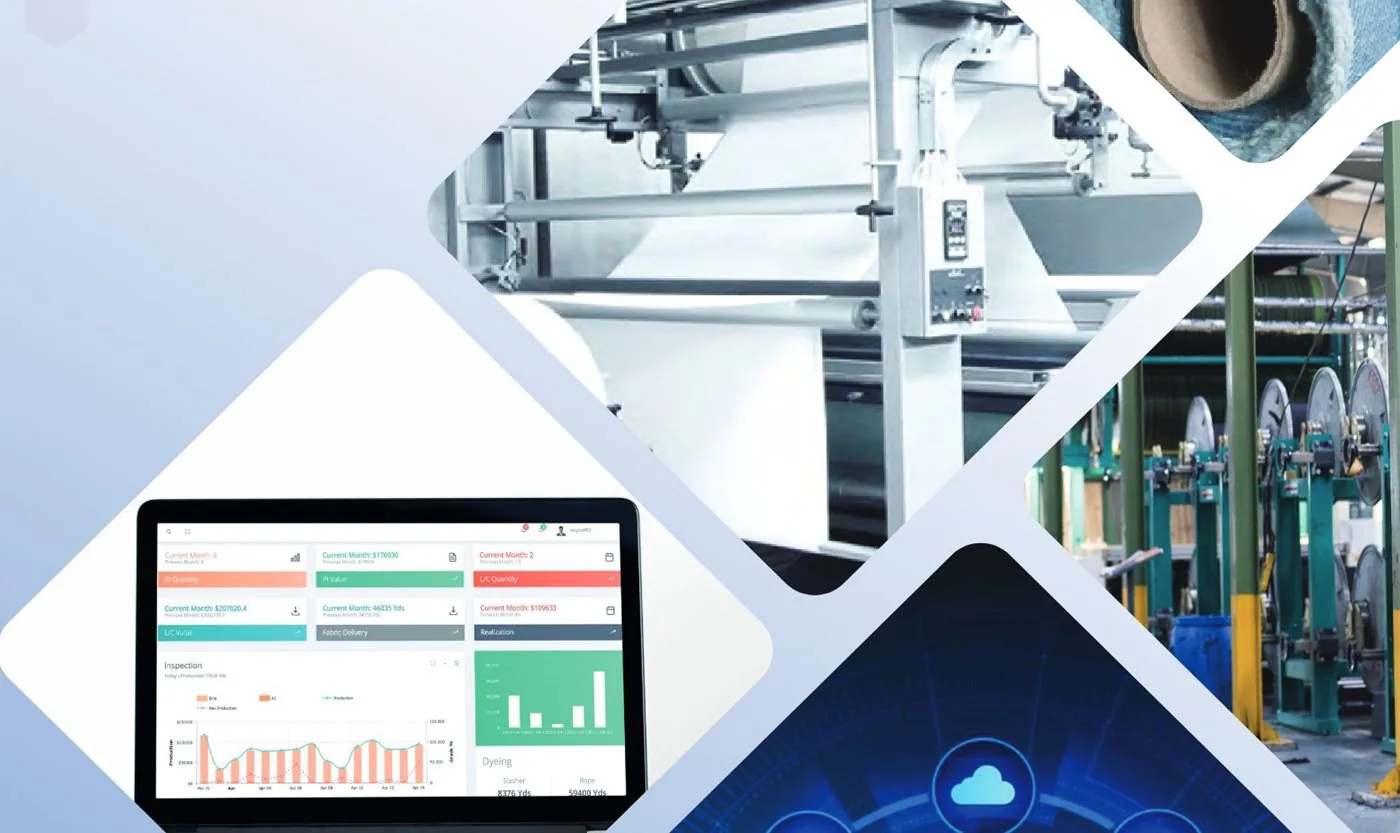
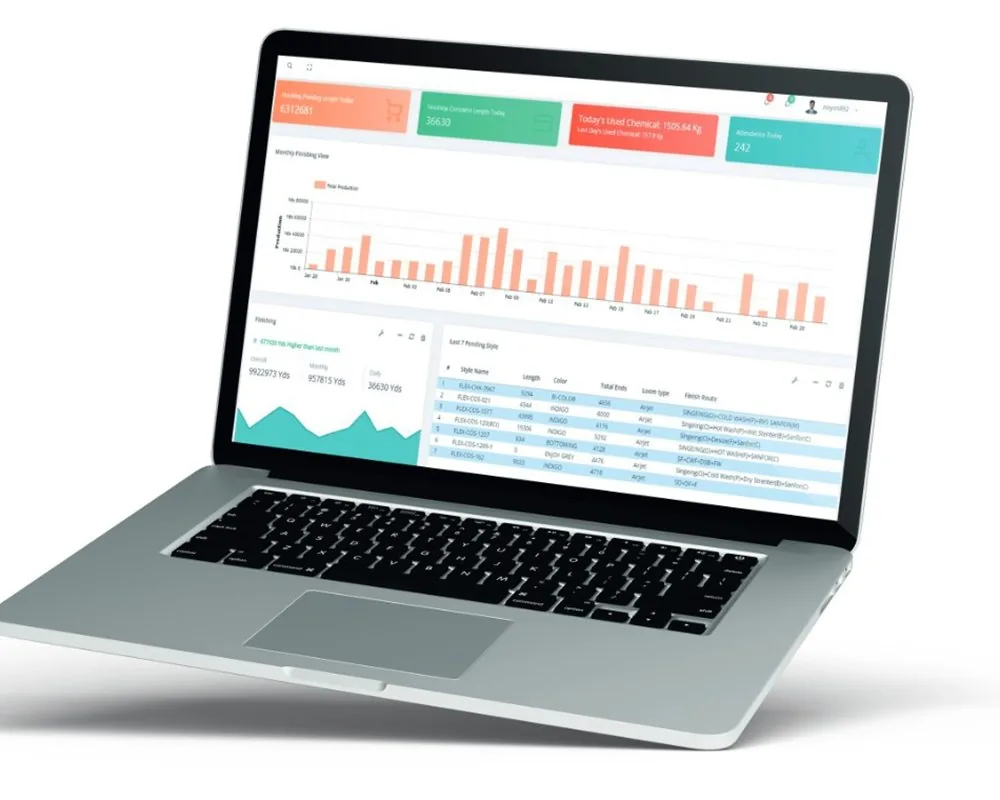
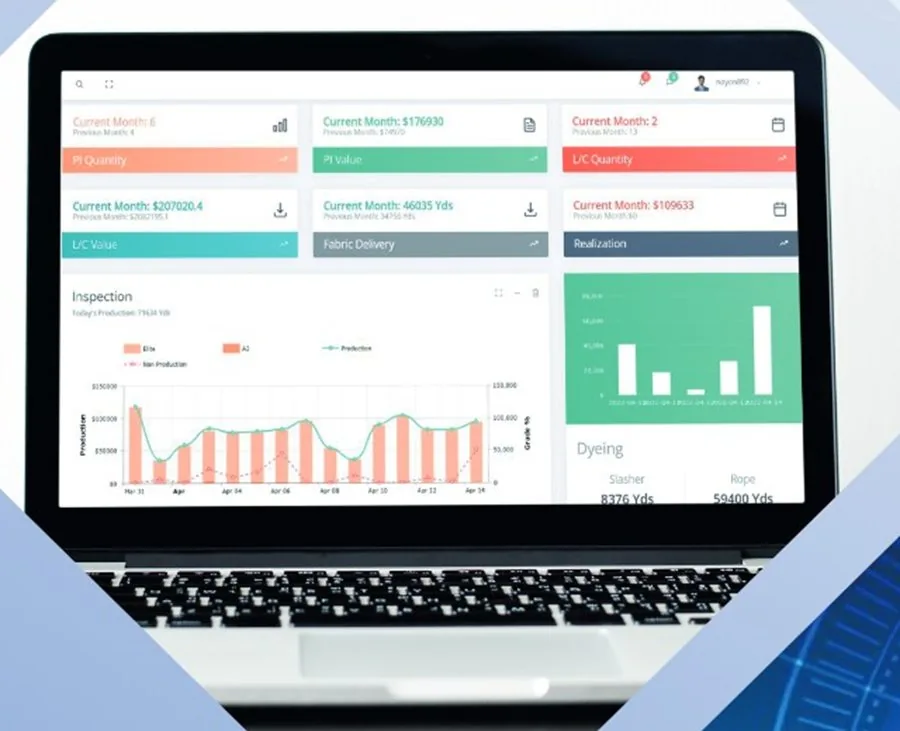
Choosing textile ERP software in Bangladesh is a very different exercise from buying a general accounting package. A denim or composite mill runs export LCs, back-to-back import LCs, several stores, a long chain of production stages and a costing process that changes with every yarn count, recipe and finish. When each of these lives in its own spreadsheet or register, management usually discovers a problem only after a shipment is late or a margin has quietly disappeared.
This guide is written for owners, directors and senior managers of textile and denim mills in Bangladesh who are evaluating an ERP for the first time, or replacing a system that no longer fits the way the mill works. It covers what to look for, how the modules should connect, and the local realities a mill system has to handle, using FLEX ERP, the denim ERP developed by FLEX InfoTech in Dhaka, as a worked example.
Why textile mills in Bangladesh outgrow spreadsheets
Most mills in Bangladesh serve the export-oriented RMG supply chain. Orders arrive against buyer requirements, fabric is developed and approved through samples, and the commercial team juggles proforma invoices, export LCs and back-to-back LCs for yarn, dyes and chemicals. At the same time, the floor is running warping, dyeing, sizing, weaving and finishing on several orders at once.
Spreadsheets can hold each piece of this, but they cannot hold the links between them. The planning team does not see that the yarn for an order is still waiting on an import LC. The store does not know which order a chemical issue belongs to. Accounts cannot tell whether a delivered order has been realised. The result is a mill that is busy every day but hard to see clearly.
- Order status is answered by phone calls to each department rather than a single screen
- Yarn and chemical stock in the register does not match the physical store
- Costing is done once before the order and rarely compared with actual consumption
- LC, delivery and payment records sit with different people in different files
- Wastage is noticed at month end rather than at the stage where it happened
What textile ERP software in Bangladesh must cover
A mill ERP should follow the order from the first enquiry to the final payment, without forcing staff to re-enter the same data. When you compare systems, check that each of the following areas exists as a working module rather than a promise on a roadmap, and that they share one database.
- Sales and sample development, including swatch cards and sample requisitions with electronic approval
- R&D with fabric analysis, bill of materials and yarn count management
- Costing before the order and after each production segment
- Commercial import and export, covering PI, LCs, invoices and realisation
- Planning with production orders, plan sheets and yarn and chemical requisitions
- Stage-wise production from warping through finishing, inspection and QA
- Separate stores for yarn, chemicals, general items and finished fabric
- Distribution, procurement, HR and payroll, and full accounts and finance
Commercial and LC handling: the Bangladesh-specific test
The commercial department is where many generic ERPs fall short for Bangladeshi mills. On the export side, the system should record the PI, export LC, local sales contract and invoice, and then track realisation and incentive claims. GSP and BTMA related records also belong here, so the commercial team is not rebuilding the same document set for each shipment.
On the import side, look for indent management, PI, import LC, back-to-back LC, bill of entry, insurance, transport and invoice records. FLEX ERP handles both directions in its Commercial module, so an export order and the back-to-back LCs that supply it can be viewed together rather than in separate files.
Tracking production from warping to the fabric store
Denim production is a chain of dependent stages, and each one has its own recipes, consumption and wastage. A useful system records daily production at each stage: warping (rope, direct, sectional and others), rope or slasher dyeing with recipes and chemical consumption, long chain beaming, sizing with automatic beam cards, weaving with mount and doff cards and crimp analysis, and finishing with shrinkage analysis.
After inspection, rolls should carry a QR-coded sticker so the fabric store can receive them by scan, record the roll location and later deliver against a delivery order with an automatic challan and gate pass. This is the point where production data turns into commercial and accounting data, and it is where manual systems most often lose track of rolls.
Costing that compares the plan with reality
In a market where yarn and chemical prices move and buyers negotiate hard, the gap between estimated and actual cost is where profit is won or lost. Your ERP should support a pre-cost before the order is confirmed, with overheads calculated automatically, and a post-cost after each production set.
The useful reports are the comparisons: BOM versus post-costing and pre-cost versus post-cost. These show which orders, qualities or stages consumed more than planned, so the costing team can correct the next quotation instead of repeating the same mistake.
Infrastructure, support and rollout in a Bangladeshi mill
Mills are often located in industrial areas where internet connectivity is not always reliable. Ask whether the ERP depends on a live internet connection. FLEX ERP runs on the mill's local network, so the floor and stores keep working when the internet is down, and management can still access it remotely through a global IP when needed.
Rollout matters as much as features. A modular system lets you start with the areas that hurt most, such as stores, planning and commercial, and add modules and users as the team becomes comfortable. Local development and support in Dhaka also make a difference when you need changes to a report or a workflow that reflects how your mill actually works.
- Start with a free demo using your own order and production examples
- Agree which modules go live first and which follow
- Clean up item codes, yarn counts and opening stock before go-live
- Train store and floor staff on their own screens, not only managers
Frequently asked questions
Is this ERP only suitable for denim mills?
FLEX ERP was designed specifically for the denim industry, with production stages such as warping, rope and slasher dyeing, long chain beaming, sizing, weaving and finishing. Mills with similar woven processes can discuss their workflow with the FLEX team, but the system's depth is in denim, and it is best to confirm fit through a demo using your own production flow.
Does a textile ERP need internet access to work?
Not necessarily. FLEX ERP runs on the mill's local network, so daily work in stores, production and accounts continues even when the internet connection is unstable. Remote access is possible through a global IP, which lets directors and head-office staff check reports and approvals from outside the mill.
Can we implement only some modules first?
Yes. FLEX ERP is modular, so a mill can choose the modules it needs and add others later along with more users. Many mills start with the areas that cause the most daily friction, such as inventory, planning or commercial, and extend to costing, HR and payroll, and full accounts once the first modules are stable.
How does the ERP help with back-to-back LCs?
The Commercial module records import documents including indent, PI, import LC, back-to-back LC, bill of entry, insurance and transport, alongside the export PI, export LC, invoice and realisation. Keeping both sides in one system makes it easier to see which import LCs support which export orders and where documents or payments are still pending.