Dhaka ·
  Thimphu ·
  Vancouver · Since 2012
A library management system in Bhutan helps the people who look after books spend less time on registers and more time helping readers. Across the country, libraries take many forms: school libraries from Thimphu to Trashigang, college reading rooms, community and dzongkhag libraries, monastic collections, and small office or organisation libraries that hold reports and reference books. Most share the same challenge: knowing which books they have, who has borrowed them and when they are due back.
This article explains what different kinds of libraries in Bhutan need from software, and how FLEX Library, built by FLEX InfoTech, supports cataloguing, ISBN scanning, lending, members and overdue tracking in a way that a teacher-librarian or volunteer can learn quickly.
Why paper registers stop working
When loans are written in an issue register, the record depends on whoever was on duty that day. Entries are skipped when the room is busy, returns are not always crossed off, and after a term nobody is sure whether a book is lost, misplaced or still with a borrower.
Staff changes make it worse. Teachers are transferred, volunteers move on and office staff change roles, and the knowledge of how the register works leaves with them. When a principal, committee or management asks how the library is being used, answering from a register is slow. A shared digital record gives everyone the same view, whoever is on duty.
What a library management system in Bhutan should include
Most libraries in Bhutan do not need the complexity of a national institution's system. They need a few things done well, in a tool that a new teacher or volunteer can pick up within an afternoon.
- A catalogue of titles and physical copies, with shelf and condition
- Quick book entry by scanning the ISBN barcode with a phone
- Member profiles with borrowing history
- Checkout, return and renewal in a few taps
- An overdue list, with optional fee policies
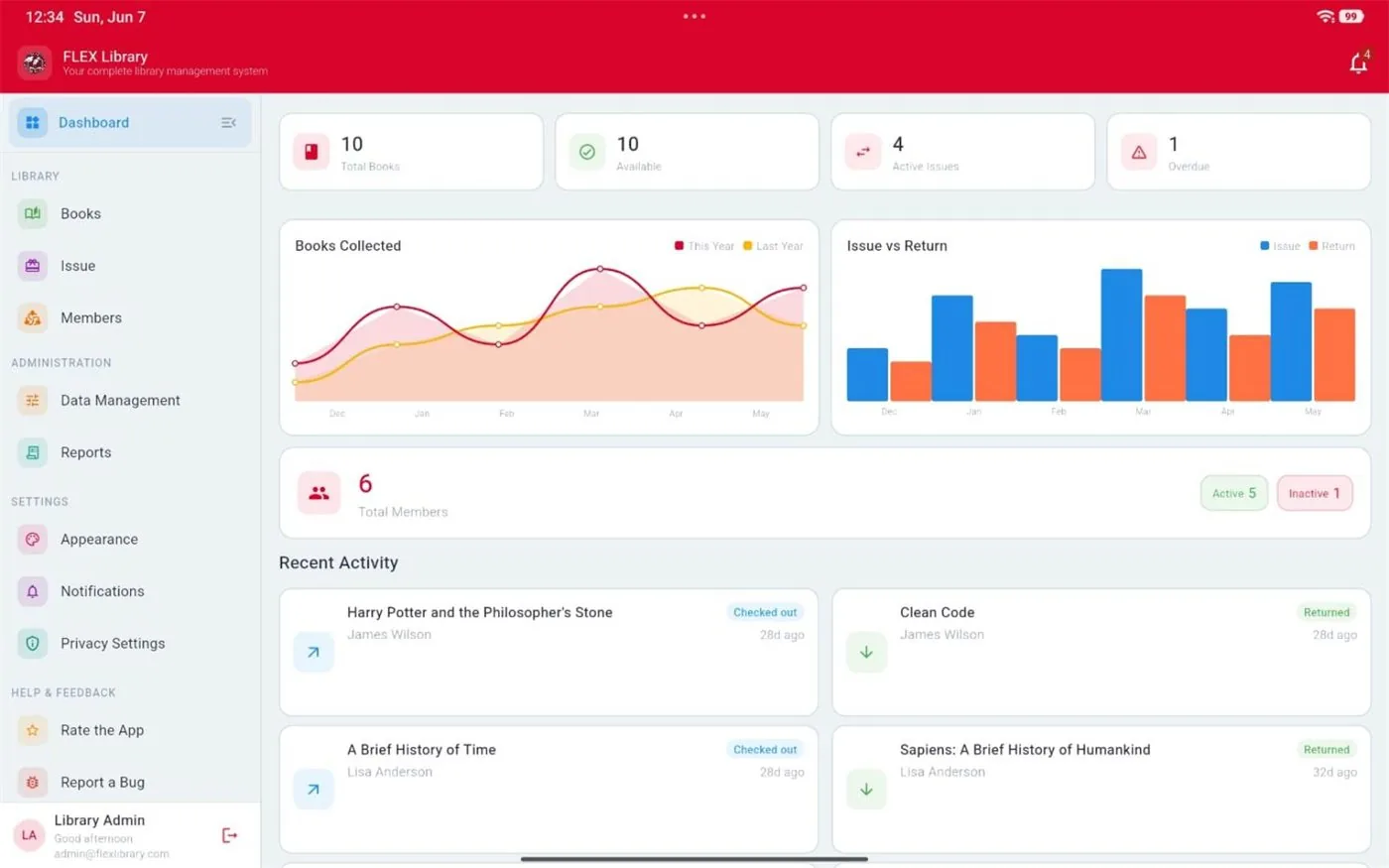
- A dashboard with totals and charts to share with management
- Separate access for administrators and members
School and college libraries
In schools and colleges, borrowing peaks around exams and the start of term, and a single teacher-librarian may handle hundreds of students. The system keeps a catalogue of titles with authors, genres and covers, and each title can hold several copies, which suits textbooks and popular readers bought in multiples. Students and staff become members with profiles and borrowing history, so it is easy to see who still has books before the end of the year.
Members can sign in to browse the catalogue and see their own loans, and can request a loan for the librarian to approve or reject. This reduces queues at the desk during busy periods.
Community, monastic and office libraries
Community libraries and reading rooms are often run by volunteers with limited time. Monastic and religious collections may hold texts that are lent rarely and need careful tracking of condition and location. Office libraries in ministries, NGOs and companies hold reports and reference books that staff borrow and forget to return.
In all of these settings, the same features help. Shelf locations and condition notes on each copy make books easy to find and protect. Member tiers, such as Standard, Trusted and Restricted, let the librarian decide who can borrow which items. A wishlist tracks titles the library hopes to acquire, and marks them acquired when they join the collection.
ISBN scanning, lending and overdue tracking
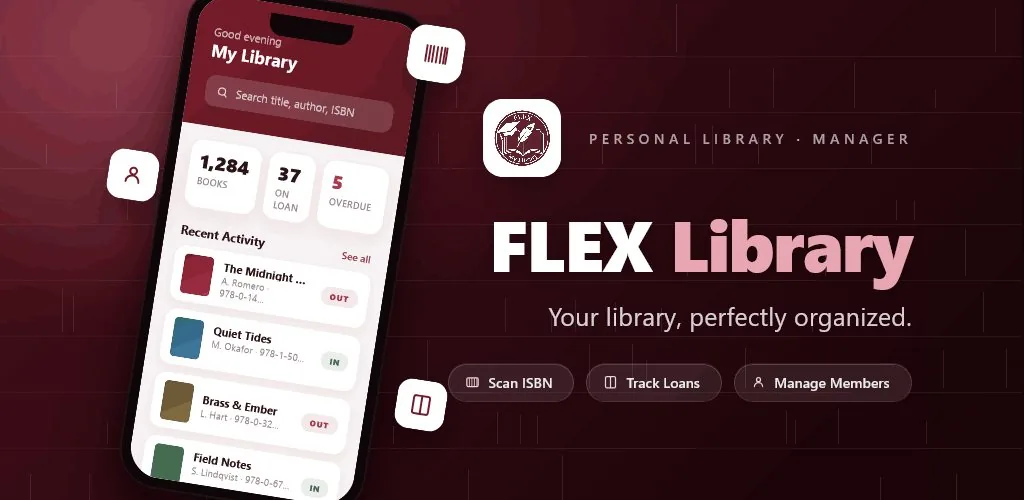
Entering an existing collection is usually the biggest hurdle. With the mobile app, a phone camera can scan the ISBN barcode on a book to look it up and add it, and on the web you can type the ISBN instead. Books without an ISBN, such as older or locally printed titles, can be added manually.
Once the catalogue is in place, daily lending is quick: check a copy out to a member, record the return, or renew the loan. The overdue list shows late books at a glance, and configurable fee policies let a library record penalties if it chooses to charge them, or simply use the list for polite reminders.
Getting started with FLEX Library in Bhutan
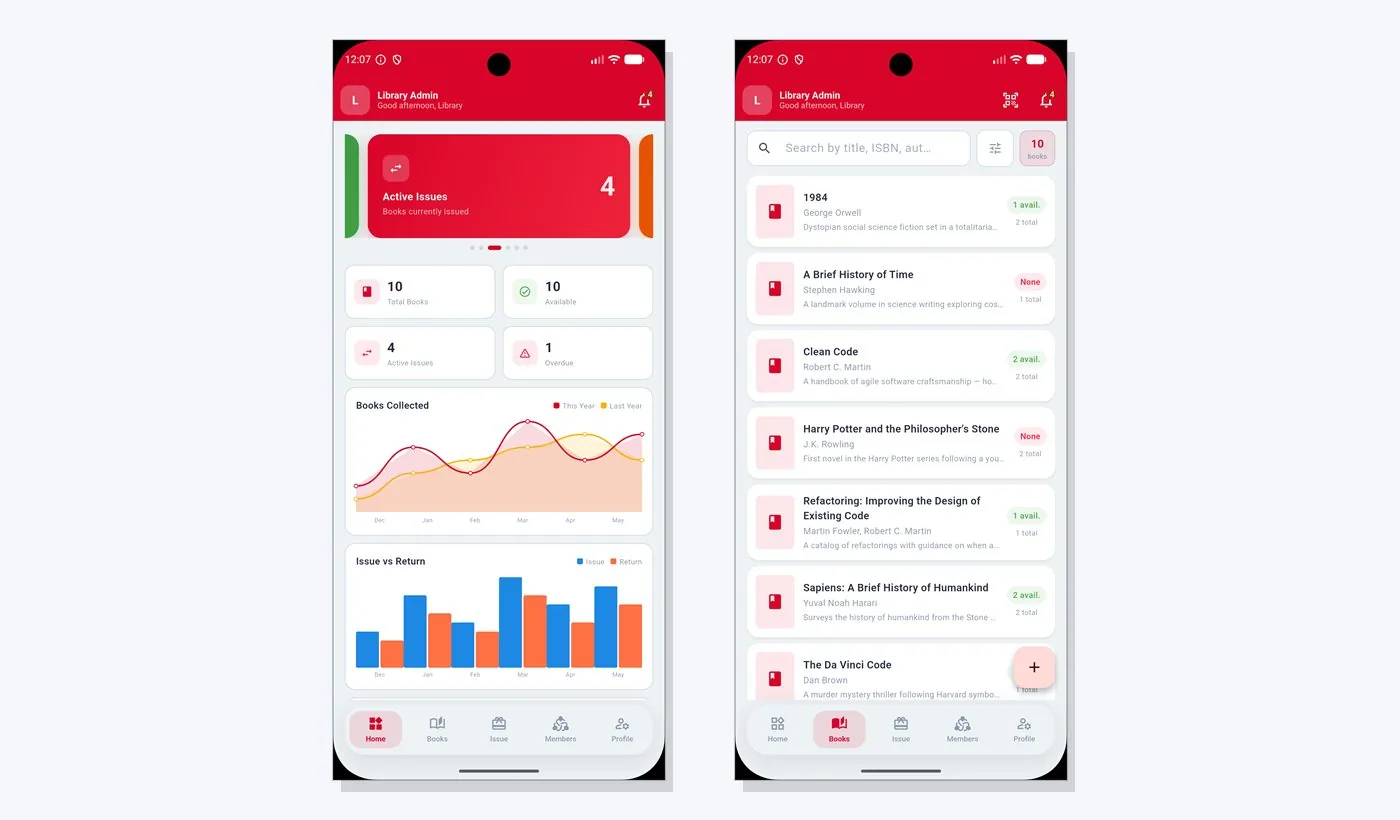
FLEX Library runs as a web app at flexlibrary.flexinfosys.com, with mobile apps for scanning and quick lending. A sensible first step is to add one shelf or section, register a group of regular borrowers and run lending digitally for a few weeks before entering the rest of the collection. The dashboard then shows totals, availability, active and overdue loans, and charts such as loans over time and popular books.
FLEX InfoTech has been building software since 2012, with its head office in Dhaka and an office in Thimphu, so libraries in Bhutan can reach the team locally.
Frequently asked questions
Can we add books that do not have an ISBN?
Yes. ISBN scanning speeds up entry for modern published books, but titles can also be added manually with their author, genre and other details. This matters in Bhutan, where many libraries hold older books, locally printed material and texts in Dzongkha that may not carry a barcode. Each title can then have one or more copies with their own shelf and condition.
Is FLEX Library suitable for a small community or office library?
Yes. FLEX Library was designed with personal and small community libraries in mind, so it does not require a full-time librarian or special equipment. A phone for scanning and a browser for the web app are enough. Larger school and college libraries benefit from the same features, especially copy tracking, member history and the overdue list.
Do we have to charge fines for late books?
No. Fee policies are configurable, so a library can record penalties on late loans or choose not to charge at all. Many school and community libraries prefer to use the overdue list for reminders only. Whatever you decide, the system shows which loans are late and by how long, so follow-up is consistent and fair.
Can members see their own loans?
Yes. FLEX Library has separate experiences for administrators and members. Members sign in to browse the catalogue, check availability and see their own current loans and due dates, and they can request a loan for an administrator to approve or reject. Administrators manage the catalogue, genres, authors, shelves, fee policies and users.