Dhaka ·
  Thimphu ·
  Vancouver · Since 2012
Every hotel sales team knows the feeling: a company asked for a corporate rate, a family enquired about a wedding, a travel agent wanted a group quote, and somewhere between a notebook, a WhatsApp chat and an email inbox, the follow-up never happened. A hotel CRM for sales teams exists to stop that from happening.
This article looks at why leads go cold in hotels across Bangladesh and Bhutan, what a hotel CRM should do about it, and how to build a simple routine that your sales team will actually follow. It also explains how FLEX CRM supports that routine.
Why hotel sales leads go cold
Hotel sales is a long game with many small steps. A corporate account may take months to sign, a wedding may involve several site visits and revised quotations, and a travel agent may send a group request, go quiet, then come back with new dates. Each step depends on someone remembering to call back at the right time.
In many properties, the information lives with individual salespeople: in their phones, notebooks and personal email. When someone is on leave or moves to another hotel, their accounts and pending deals often go with them. Managers then have no reliable picture of what is in the pipeline, and forecasts become guesswork. Guests and buyers notice too: a corporate client who has to repeat the same request to three different people soon starts looking elsewhere.
What a hotel CRM for sales teams should do
A CRM does not sell rooms by itself. It gives the team one shared place for customers, deals and tasks, so nothing depends on memory. FLEX CRM is built around the features that matter most to a hotel sales office:
- Centralised customer management, with a full view of each company, agent and contact
- Sales pipeline tracking from first enquiry to signed contract or confirmed event
- Task and activity management, so every lead has an owner and a next step
- Marketing automation for campaigns to the right segment of customers
- Analytics and reporting on pipeline, activity and results
- Integration with email, calendars and accounting
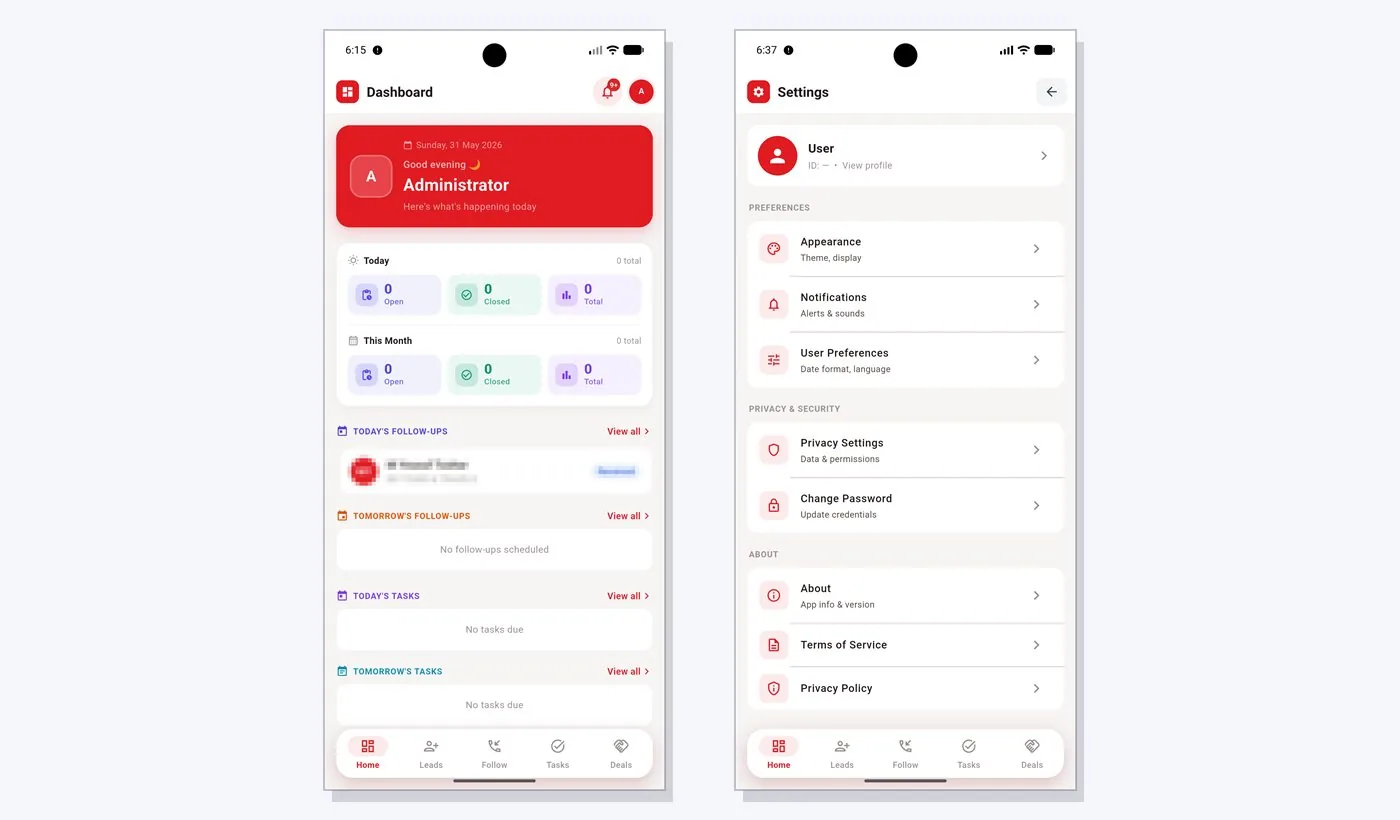
- Mobile access for salespeople who spend their day visiting clients
Building a pipeline for corporate, groups, weddings and MICE
Start by agreeing on a small number of pipeline stages that match how your hotel actually sells, for example: new enquiry, site visit or meeting, proposal sent, negotiation, confirmed and lost. Use the same stages for every salesperson, so the general manager can compare like with like.
Then separate the main types of business. Corporate accounts, travel agents and tour operators, weddings and social events, and conferences or MICE each have different buyers, timelines and paperwork. Tagging each deal by type and source makes it easy to see where business is coming from and which segment needs attention before the next season.
A daily routine your sales team will follow
The best CRM is the one people open every morning. Keep the routine short and consistent:
- Start the day with the list of follow-ups and tasks due today
- Log every call, meeting and site visit against the account straight away
- Move each deal to its new stage as soon as something changes
- Set the next follow-up date before closing any record
- Mark lost deals with a reason, such as price, dates or competition
- Review the pipeline together once a week
Reports that help the general manager
For management, a CRM turns sales from a black box into something that can be measured. Useful reports include the value and number of deals at each stage, new leads by source, activities logged per salesperson, conversion from proposal to confirmed, and reasons for lost business. Reviewed weekly, these numbers show whether the team needs more leads, better follow-up or sharper pricing.
Because FLEX CRM integrates with accounting, sales and finance can work from the same customer records, which helps when a corporate account's credit terms or outstanding invoices need checking before a new deal is signed.
Rolling out a CRM without resistance
Salespeople sometimes see a CRM as a way of watching them. Present it instead as a way of protecting their work and saving time. Import existing accounts and contacts first, so nobody starts from an empty screen. Train the team on the daily routine before the advanced features. Make the weekly sales meeting run from the CRM, so updating it becomes part of the job rather than extra admin.
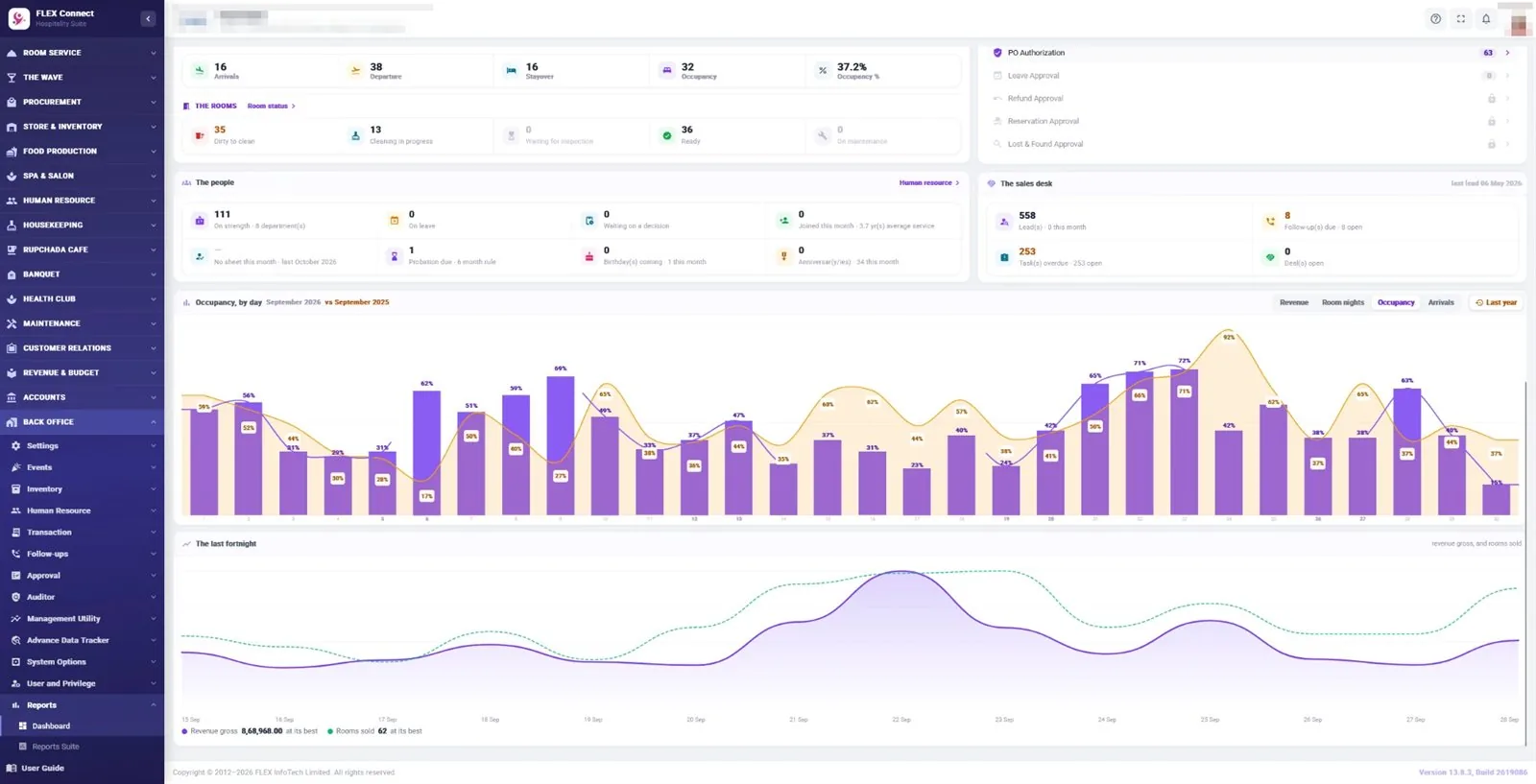
Hotels already using FLEX systems can connect the dots further. FLEX PMS includes a CRM and Lead module, and FLEX Connect includes a Customer Relations module with follow-ups, deals and email and WhatsApp templates, so sales and operations share the same picture of each customer.
Frequently asked questions
Is a CRM worth it for a small hotel sales team?
Yes, often more so. In a small team, one person on leave can mean leads are forgotten. A CRM keeps every account, deal and follow-up in one place, so anyone can pick up where a colleague left off. FLEX CRM scales with you, so a property can start simply and add users and campaigns as the team grows.
Can salespeople use FLEX CRM on their phones?
Yes. Mobile accessibility is one of FLEX CRM's core features, so salespeople can check accounts, update deals and log follow-ups while visiting clients or showing a venue. Updating the record straight after a meeting, rather than at the end of the week, is one of the simplest ways to keep the pipeline accurate.
How is a hotel CRM different from the guest profiles in a PMS?
A PMS records guests who have stayed and what they spent. A CRM tracks the people and companies you are trying to win, along with every enquiry, proposal and follow-up before a booking exists. The two work best together, which is why FLEX also offers CRM features inside FLEX PMS and FLEX Connect.
Does FLEX CRM connect with email and accounting?
Yes. FLEX CRM offers integration with email, calendars and accounting, so meetings and messages stay linked to the right account and sales can see the financial side of each customer. Ask for a demo to see how these integrations would work with the tools your hotel already uses.