Dhaka ·
  Thimphu ·
  Vancouver · Since 2012
In Bangladesh, money moves through many hands and channels in a single day. You might pay a rickshaw fare in cash, send money home through bKash, buy groceries with a debit card and receive a salary in your bank account. An expense tracker app in Bangladesh should bring all of those movements into one view, so you can finally answer the simple question: where did my money go this month?
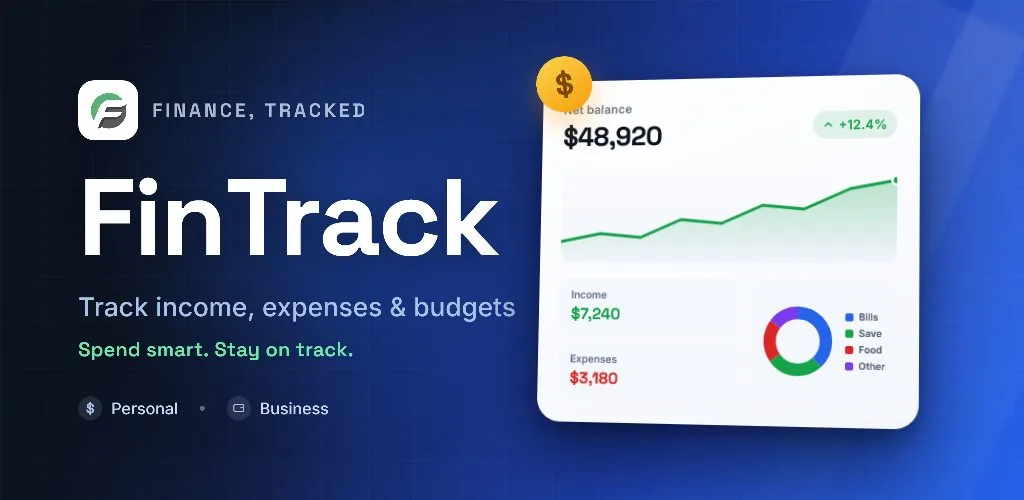
This guide explains what to look for in an expense tracker, how to set one up in an afternoon, and how to turn it into a habit that sticks. It uses FinTrack, the personal and business finance tracker built by FLEX InfoTech in Dhaka, as a practical example.
Why tracking expenses is harder in Bangladesh than it looks
Most budgeting advice assumes all your spending passes through one bank card. That is rarely true in Bangladesh. Cash is still everyday money for transport, bazaar shopping and small purchases. Mobile financial services are used for bills, transfers and sending money to family. Bank accounts and cards handle salary, rent and larger purchases. Each channel keeps its own record, or none at all.
The result is that many households know their income precisely but have only a rough idea of their spending. Small daily amounts add up quietly, festival months like Eid bring large one-off costs, and loans to or from relatives are easy to forget. Tracking is less about strict discipline and more about seeing the full picture in one place.
What to look for in an expense tracker app in Bangladesh
A good tracker should fit how money actually moves here rather than forcing you into a foreign template. These are the features worth checking before you commit.
- Support for every transaction type: income, expenses, transfers between your own accounts, investments and loans.
- Multiple accounts, so cash, bank and card balances are tracked separately and add up correctly.
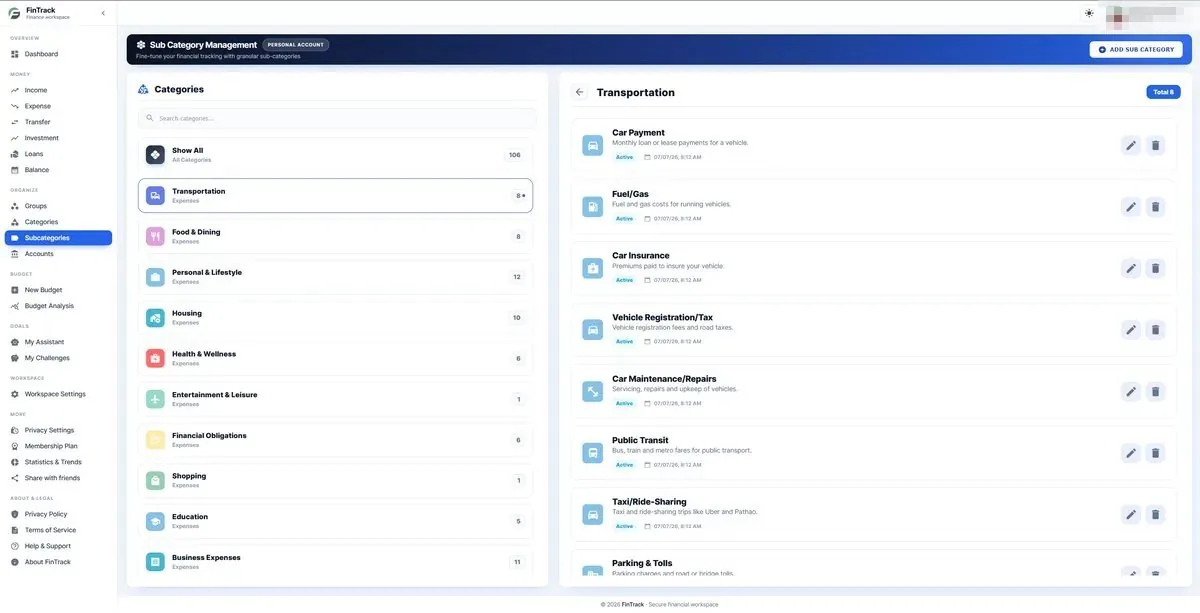
- Categories and subcategories you can adjust, such as groceries, transport, utilities, school fees and family support.
- A budget planner that compares what you planned with what you actually spent.
- Reminders for bills and repeating payments, such as rent, internet and DPS instalments.
- Reports and statements you can export, for your own records or for a business.
- A language option in Bangla for family members who prefer it.
Setting up FinTrack in one afternoon
FinTrack has an Android app and a web app at app.fintrackhub.com, both working from the same account. A practical first setup takes about an hour if you keep it simple.
Start by creating an account for each place you keep money: your cash wallet, each bank account and each card. If you use a mobile wallet such as bKash heavily, give it its own account as well so its balance does not blur into cash. Enter today's balance for each one. Next, review the starter set of categories and adjust it to match your life. Group them sensibly, for example Household, Transport, Education and Family, with subcategories underneath.
Finally, record the transactions from the last few days. You will immediately see the dashboard fill with wallet balances, recent transactions and an income-versus-expense chart that you can filter by today, the last seven days, this month, this year or a custom range.
Build a monthly budget in taka that you will actually follow
Once you have two or three weeks of real data, you can plan a budget based on evidence rather than guesswork. In the app, budgets are planned by category group, and the budget analysis compares your actual spending against the plan, with drill-downs into each category.
Begin with the essentials: rent, utilities, groceries, transport and school costs. Then add regular commitments such as family support or loan repayments. Leave a realistic amount for small daily spending, because a budget that ignores tea, snacks and rickshaw fares will fail in the first week. Review it at month end, and adjust the plan rather than abandoning it.
Saving for goals, Eid and emergencies
Large expenses are easier to handle when you prepare for them. Festival shopping, a family wedding, a new phone or an emergency fund are all good candidates for a savings goal. Its savings challenges let you set a target, record progress deposits and see your completion percentage as it grows.
Pair goals with reminders. The My Assistant feature can remind you about bills and payments through notifications, so due dates for rent, utilities or instalments do not slip past. Over time, the monthly statement and automatic opening and closing balances for each account give you a clear record of how your finances are changing.
A simple daily habit that keeps your tracker accurate
The best expense tracker is the one you keep using. These small habits make the difference between a tracker that is accurate and one that is abandoned after a month.
- Record cash spending the same day, ideally in the evening, while you still remember it.
- Log transfers between your own accounts as transfers, not as expenses, so totals stay correct.
- Record money lent to or borrowed from relatives as loans, so nothing is forgotten.
- Check your dashboard once a week and compare spending with your budget.
- Export a monthly statement if you need records for tax, a landlord or a business partner.
Frequently asked questions
Is there an expense tracker app made in Bangladesh?
Yes. FinTrack is built by FLEX InfoTech, a software company founded in 2012 with headquarters in Dhaka. It is available as an Android app and a web app at app.fintrackhub.com. It tracks income, expenses, transfers, investments and loans across cash, bank and card accounts, and the web interface is available in English and Bangla.
Can I track bKash spending in an expense tracker?
You can record mobile wallet spending manually by setting up a separate account for your wallet and logging payments and transfers against it, just as you would for cash or a bank account. The app does not connect directly to bKash or other providers, so entries are added by you, which also helps you stay aware of each payment.
Can families use one tracker together?
Many families track household money in one place by agreeing who records which spending. It also supports business workspaces where an admin invites members and assigns roles, which suits small shops and teams. For a household, the simplest approach is to agree on categories and record spending regularly, then review the monthly dashboard together.
Is FinTrack free to use?
The product offers subscription tiers. Upgrades are currently handled manually: you upload proof of payment and an administrator approves the upgrade. For current plan details, visit the FinTrack page or contact FLEX InfoTech at info@flexinfosys.com, and the team will explain the options available for personal and business use.