Dhaka ·
  Thimphu ·
  Vancouver · Since 2012
More owners are asking whether a cloud PMS for hotels in Bangladesh is the right move. The appeal is easy to see. An owner living in Dhaka can check a resort in Cox's Bazar or Sylhet from a phone, nothing has to be installed on every desk, and updates arrive without an engineer travelling to the property.
But the choice is not automatic. Some properties run very well on a desktop system over the local network, and a cloud system only pays off if the property's connection can support it. This guide compares the two models, explains what changes when you work from a browser and a phone, and looks at why owners of more than one property often move to the cloud first.
Cloud or desktop: what actually changes
A desktop hotel system runs on a server or main computer at the property. Staff connect to it over the local network, and the data stays in the building. It keeps working when the internet fails, which is a real strength, but someone has to look after the server, the backups and the updates, and anyone away from the property needs a remote connection to see anything.
A cloud system runs in a web browser. Reception, the restaurant, the store and the accounts office all read and write the same live data over the internet, and so does the owner, wherever they are. There is no server cupboard to maintain, and a failed computer at the front desk does not take the hotel's records with it. The trade-off is that the property needs a dependable internet connection, ideally with a backup line.
Why a cloud PMS for hotels in Bangladesh suits many properties
Many hotels and resorts in Bangladesh are family businesses or investor-owned properties where the owner does not sit at the property every day. A business hotel in Gulshan or Motijheel may have its owner across town, while a beach resort in Cox's Bazar or a tea-garden resort near Sreemangal is often run for owners based in Dhaka or Chattogram. A cloud system gives those owners the same live view as the manager on site.
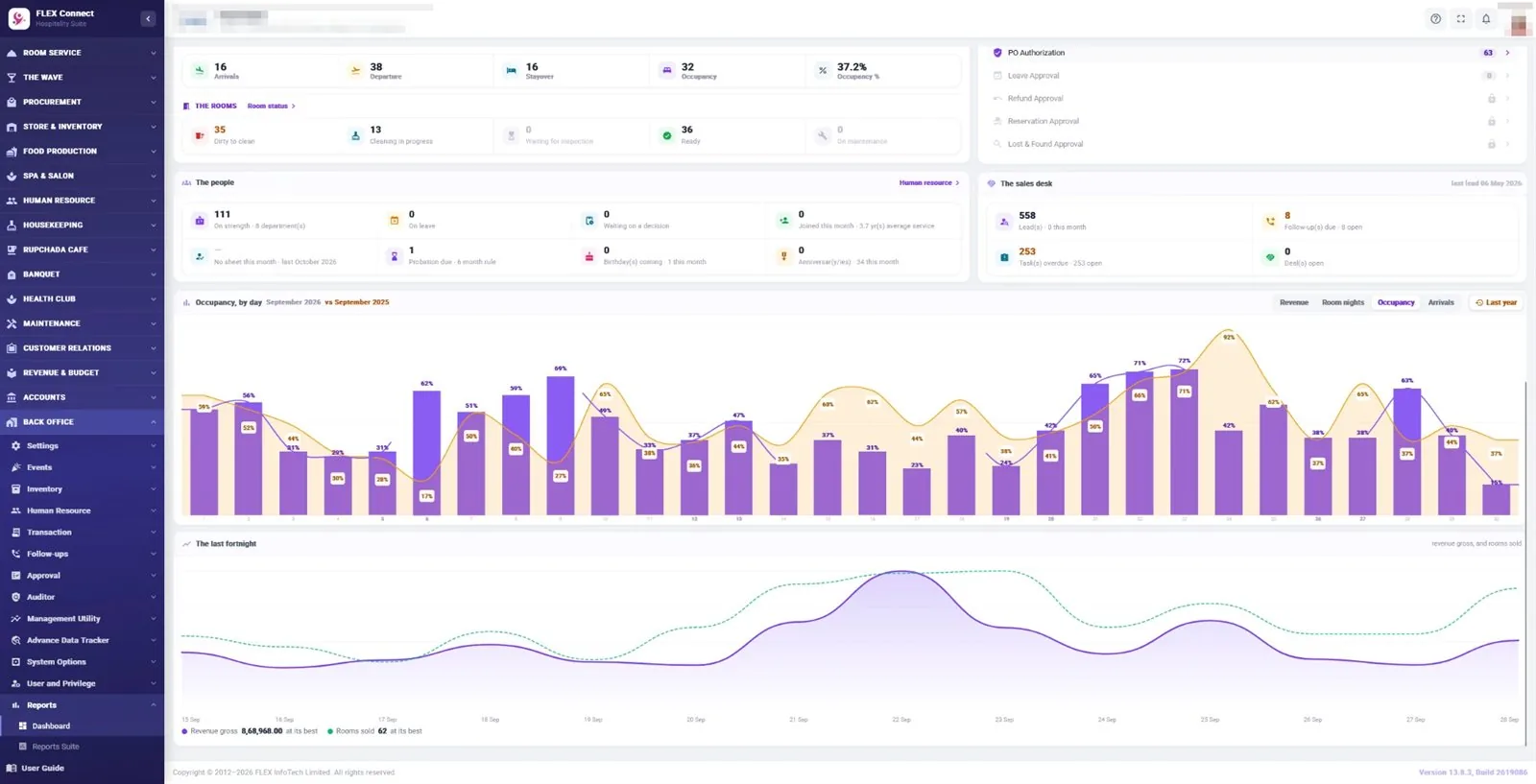
FLEX Connect, the cloud edition of FLEX, brings 22 modules together on one database, so the live view covers more than rooms. From a browser, an owner or general manager can follow:
- Today's arrivals, departures, stayovers and room status from the Front Office
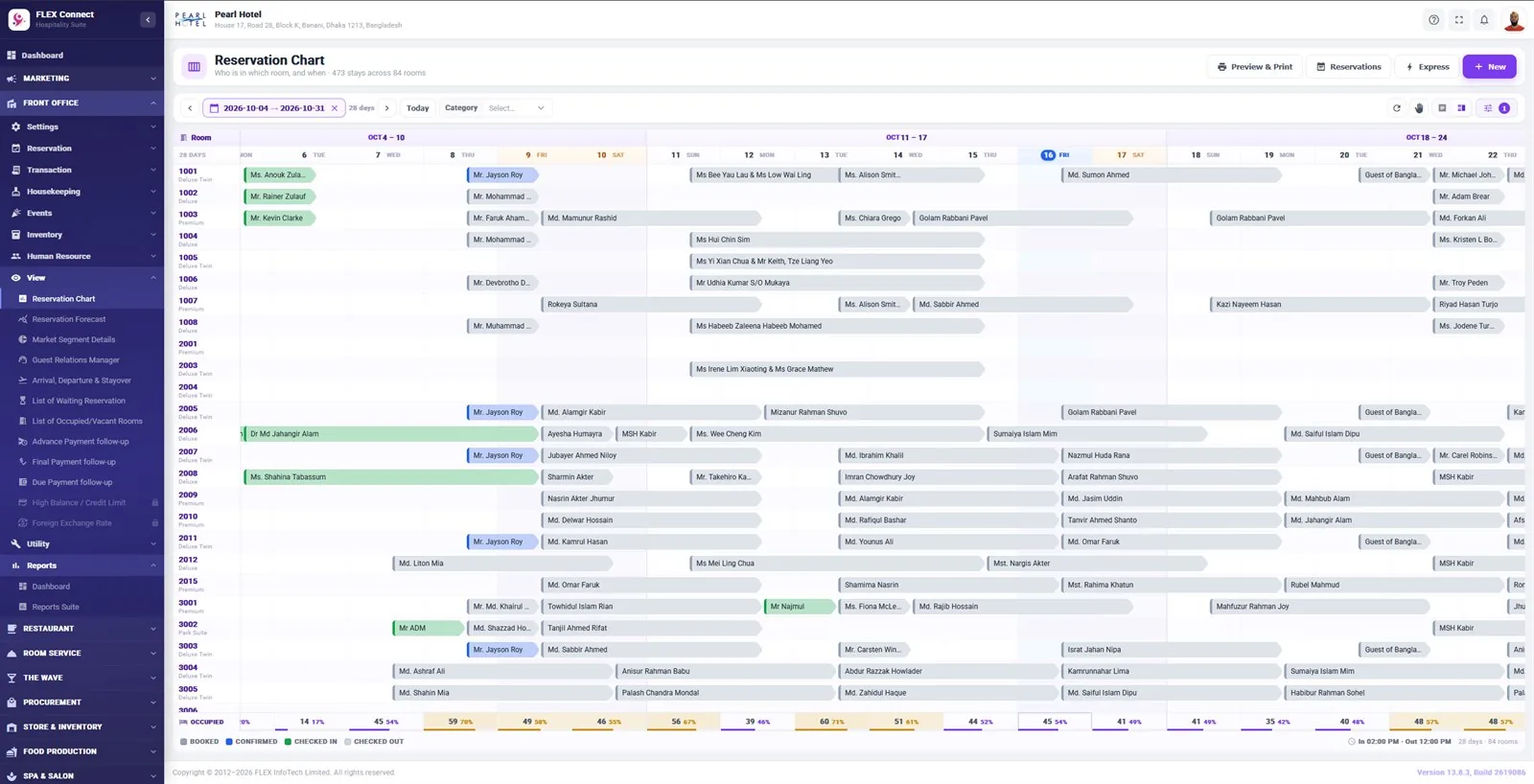
- The reservation chart and reservation forecast for the coming weeks
- Restaurant, room service, café and bar takings by outlet
- Advance, final and due payment follow-up lists
- Daily sales and settlement, city ledger and receivables in the Back Office
- Ledgers, trial balance, profit and loss and balance sheet in Accounts and Finance
Working from a phone and a browser
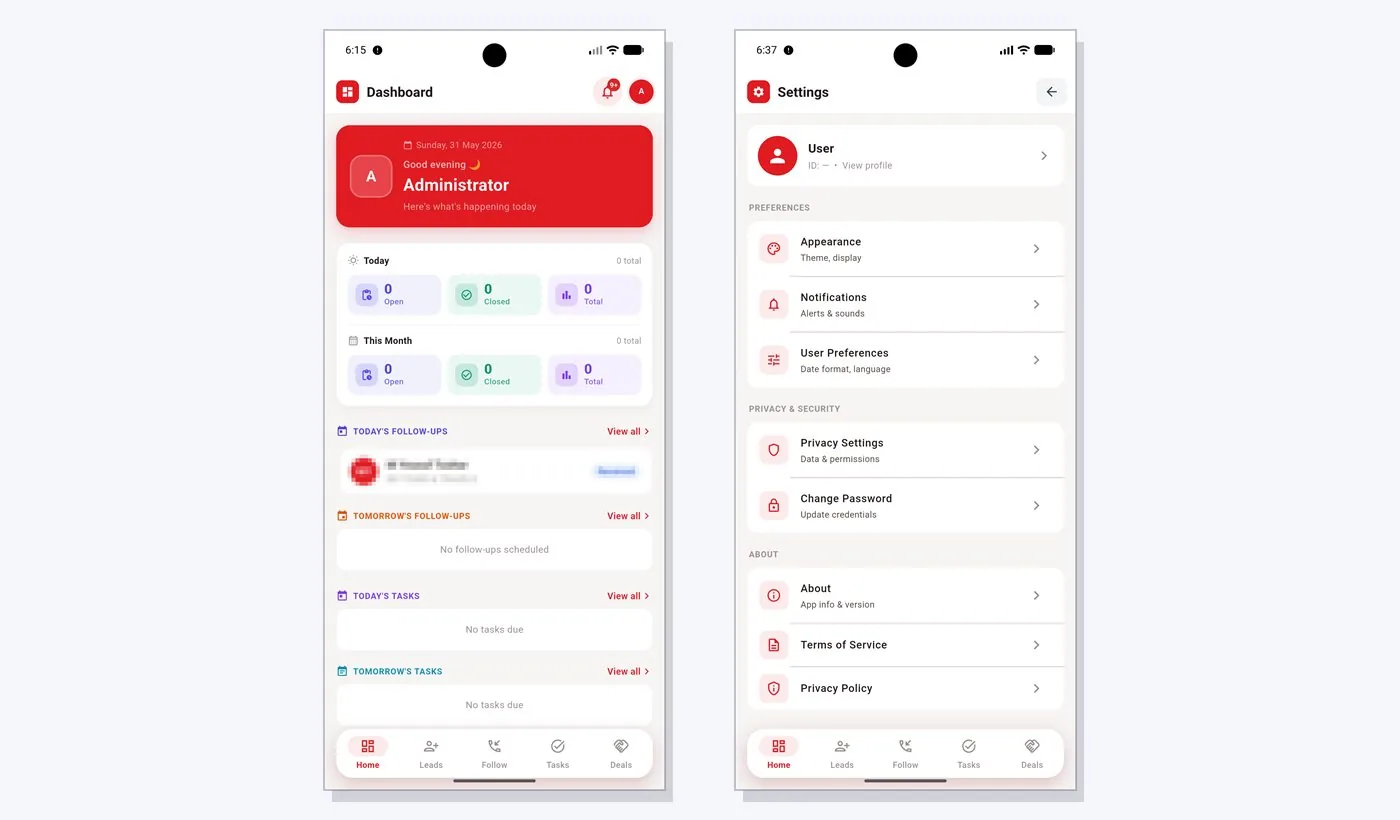
In most Bangladeshi hotels, supervisors, waiters and housekeepers already run much of their day from a smartphone. A cloud PMS can build on that. The FLEX Connect mobile app (Android & iOS) opens one module at a time, with its own tabs and menu, and covers front office and reservations, housekeeping, the restaurant, room service and café outlets, banquet, spa, health club, CRM, HR, store, procurement, accounts and the back office.
User privileges decide what each person sees, on the web and on the app. A housekeeping supervisor can update room status from the corridor, an F&B manager can check outlet sales between services, and a general manager can approve a purchase requisition while travelling between properties. Staff see only the screens they need, which keeps the app simple and the data safe.
Running more than one property
Multi-property owners usually feel the limits of desktop systems first. With a separate server at each hotel, comparing a Dhaka city hotel with a Cox's Bazar resort means waiting for reports, exporting files or making phone calls. Each site has its own backups, its own updates and its own risk of a failed machine.
With a cloud system, each property is reached the same way: open the browser, sign in and check the dashboard. Head office can review occupancy, outlet sales and money owed without visiting, and the same people can follow up on purchase orders and staff matters from wherever they are. Before you commit, ask the vendor to show exactly how separate properties are set up and reported in your case, so the structure matches how your group is owned and managed.
Seasons, groups and direct bookings
Demand in Bangladesh moves with the calendar. Cox's Bazar and Sylhet fill up during the cooler months, school holidays and the long Eid breaks, while city hotels follow corporate travel, conferences and weddings. A cloud PMS should help you read those swings early. The system supports day-by-day dynamic rates, a reservation forecast and reports that show how far ahead each market books.
Groups, corporate blocks and tour bookings need waitlists and advance payment follow-up rather than side spreadsheets. For individual guests, its booking engine, available as a WordPress plugin, takes bookings on your own website against the same live inventory the front desk uses, with online payment through SSLCommerz, shurjoPay, aamarPay or Stripe. That way, a booking made at midnight is already on the reservation chart in the morning.
Taka billing, VAT and service charge
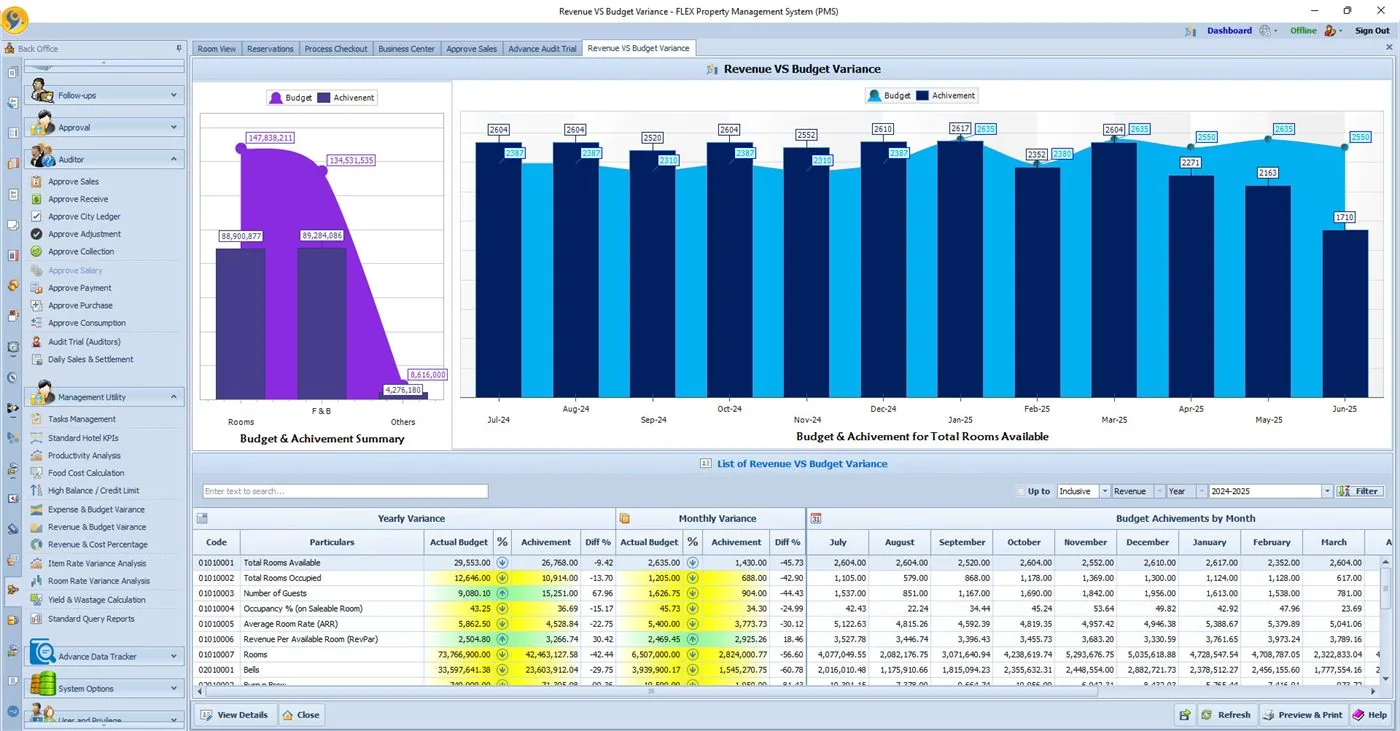
Every bill must show the correct VAT and, where you apply it, service charge, in Taka. In a cloud system these rates should be set centrally by an authorised person, not typed in by each cashier. In FLEX Connect the Back Office holds payment types, taxes, card commission and foreign exchange rates, and the reports include tax reports, daily sales and settlement and outlet collection statements.
Tax rules can change, so ask any vendor to walk through a sample bill and the related tax report with your accountant before you go live, and confirm how corrections after the night audit are recorded and approved.
When desktop is still the better choice
A cloud system is only as good as the connection behind it. A Dhaka hotel with fibre and a mobile data backup will be well served. A remote resort where the line regularly fails for hours may be better off with a system that runs on the local network. FLEX offers both: the desktop version of FLEX PMS works over a LAN without depending on the internet, and can be reached remotely through a global IP address when a connection is available. Choose the model that fits your location and the way you manage, not the one that sounds newest.
Frequently asked questions
Is a cloud PMS safe for a hotel in Bangladesh?
A well-run cloud PMS can be safer than a single computer at reception, because records are not lost if a local machine fails or is stolen. Check how access is controlled. FLEX Connect uses user groups, group privileges and individual user privileges, so each member of staff sees only the modules and screens they need, on the web and on the mobile app (Android & iOS).
What happens if the internet goes down?
A cloud system needs a connection to work, so a backup line, such as a mobile data router from a second provider, is strongly recommended. If your property regularly loses its connection for long periods, consider the desktop version of FLEX PMS instead. It runs on your local network without depending on the internet and still offers remote access.
Can I see all my hotels from one phone?
With a cloud system, each property is reached through a browser or the mobile app (Android & iOS), so an owner can check arrivals, room status, outlet sales and money owed from anywhere with a connection. Ask the FLEX team to show how your own properties would be set up, so reporting matches the way your group is owned and run.
Who develops FLEX Connect?
FLEX Connect is built by FLEX InfoTech Limited, which has worked with hotels and resorts since 2012 from its head office in Dhaka and an office in Thimphu, Bhutan. More than 130 hotels and resorts use FLEX, and the company offers a free demo and 24/7 after-sales support for properties across Bangladesh.