Dhaka ·
  Thimphu ·
  Vancouver · Since 2012

Few experiences capture the country quite like a Sowa Rigpa hot stone bath in Bhutan. Locally the bath is known as dotsho: river stones are heated in a fire until they glow, then lowered into a wooden tub of water, where they hiss, crack and slowly release their warmth. For many Bhutanese families it is a familiar way to unwind after hard work or cold weather, and for visitors it has become one of the most memorable parts of a trip.
This guide explains where the hot stone bath sits within Sowa Rigpa, the traditional medical system of the Himalayas, what a session typically involves, how to prepare, and how to approach it with respect and common sense. It also covers how to find and book a session using Sorig, a spa and wellness marketplace built for Bhutan.
What is Sowa Rigpa?
Sowa Rigpa, often translated as the science of healing, is a traditional system of medicine practised across the Himalayan region, including Bhutan. It views health as a balance within the body and between the body and its environment, and it uses diet, behaviour, herbal formulations and external therapies to support that balance.
In Bhutan, traditional medicine has a recognised place alongside modern healthcare, and traditional practitioners are trained in its methods. External therapies, which include baths, compresses and massage, are the part of Sowa Rigpa that visitors are most likely to encounter. The hot stone bath is the best known of these.
The Sowa Rigpa hot stone bath in Bhutan, explained
A traditional dotsho uses a wooden tub, often built for one or two people, with a separate partitioned section where the heated stones are placed. The partition protects bathers from direct contact with the stones while letting the heat move through the water. Attendants add more stones over the session to raise the temperature, and bathers can usually ask for more or less heat.
The water is frequently infused with local herbs, with artemisia being a common choice, which gives the bath a distinctive earthy scent. Sessions are unhurried. Many people soak, rest outside the tub, drink water and return to the bath several times. The atmosphere is quiet and simple rather than luxurious, which is part of its appeal.
Traditionally, people turn to the hot stone bath to relax tired muscles and warm up during cold months. It is important to treat it as a traditional wellness practice rather than a cure. If you have a specific health concern, consult a qualified doctor or traditional medicine practitioner.
How to prepare for your first dotsho
A little preparation makes the experience more comfortable and safer. Follow the guidance of the venue, and use these general points as a starting checklist.
- Eat lightly beforehand and avoid alcohol before and during the bath.
- Drink water before and after, as the heat can be dehydrating.
- Bring or confirm swimwear, a towel and a change of warm clothes for afterwards.
- Allow a relaxed time slot so you do not have to rush to another appointment or long drive.
- Tell the attendant if you feel dizzy, light-headed or uncomfortable, and leave the tub straight away.
- Check with a doctor first if you are pregnant, have heart or blood pressure conditions, or have any other medical concern.
Other Sowa Rigpa and wellness therapies to explore
The hot stone bath is often a starting point. Many spas in Bhutan offer massages, herbal compresses and steam or sauna sessions, and some combine modern spa treatments with elements inspired by traditional practice. Yoga and meditation are also popular with visitors who want a slower, more reflective trip.
When you compare options, read each service description rather than relying on the name alone. Two spas can use similar names for quite different treatments. Look at the duration, what is included and any guidance on preparation. If a therapy claims to treat a specific illness, ask questions and seek medical advice rather than relying on marketing language.
Wellness tourism in Bhutan and visiting with respect
Wellness tourism in Bhutan is closely tied to the country's culture, landscape and values. Visitors from India, Bangladesh, Nepal and further afield increasingly plan their trips around relaxation and reflection as much as sightseeing.
Visiting with respect means following local guidance, being patient with simple facilities in rural areas, and remembering that for many Bhutanese the hot stone bath is an everyday tradition, not a performance. Ask before taking photographs of people or private spaces, keep noise down, and leave the bathing area as you found it. These small acts help keep the tradition authentic for the next visitor.
How to find and book a hot stone bath with Sorig
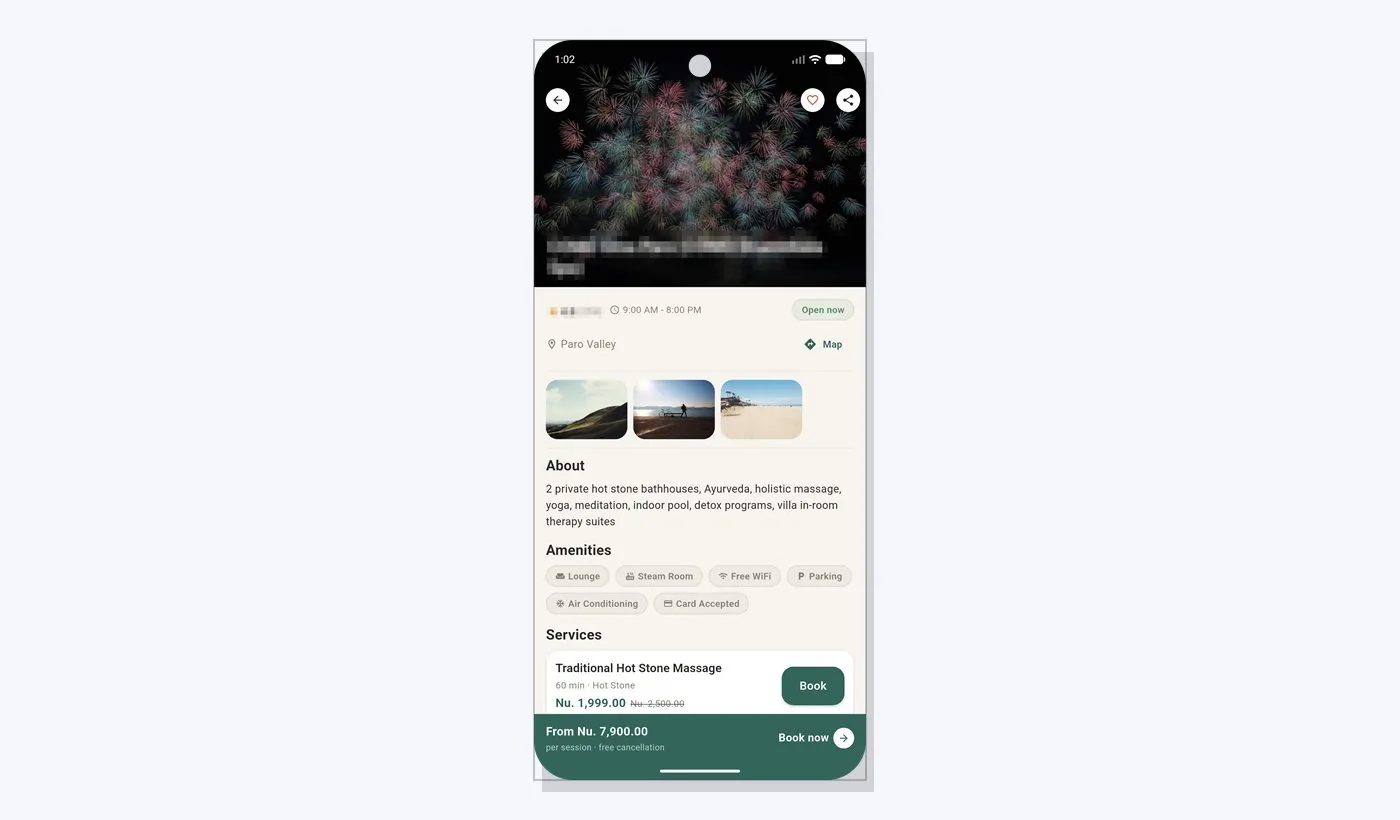
Finding a hot stone bath used to depend on word of mouth or a call from your hotel. Sorig brings participating spas together in one marketplace, available on Android and on the web at mysorig.com. You can browse a feed of featured and nearby spas, search for a service, filter by category and see venues on a map, which helps when you are moving between Thimphu, Paro and other valleys.
Each spa profile shows photos, opening hours, amenities, ratings and a service list with prices in Nu. Choose a date and time, confirm the booking, and it will appear in your booking history, where you can view or reschedule it. After your visit, you can leave a review to help the next guest choose well. Online card payment is not live in the app at present, so confirm payment arrangements with the spa directly.
Frequently asked questions
What is a dotsho?
Dotsho is the Bhutanese name for the traditional hot stone bath. River stones are heated in a fire and placed in a partitioned section of a wooden tub, warming the water gradually. Herbs such as artemisia are often added. It is one of the external therapies associated with Sowa Rigpa and is a familiar part of daily life for many families in Bhutan.
Is the hot stone bath safe for everyone?
Not necessarily. The heat can be strong, so people who are pregnant, have heart or blood pressure conditions, or have other medical concerns should consult a doctor before bathing. Everyone should drink water, avoid alcohol, eat lightly beforehand and leave the tub immediately if they feel unwell. Always follow the guidance of the venue and its attendants.
How long does a hot stone bath session usually take?
It varies by venue. Many people prefer an unhurried session that includes time to rest between soaks, so it is wise to leave a generous slot in your day rather than squeezing it between other plans. Check the service description and duration on the spa profile before you book, and ask the spa if you are unsure.
Can I book a Sowa Rigpa hot stone bath online in Bhutan?
You can use Sorig on Android or at mysorig.com to discover spas, compare their listed services and prices in Nu, and book a date and time slot. Availability depends on which spas list the treatment in your area. Online card payment is not currently live in the app, so check with the spa how payment is handled.